



By using our website, you agree to the use of cookies as described in our Cookie Policy
The Real Difference Between Fresh Baked Bagels and Store Bought
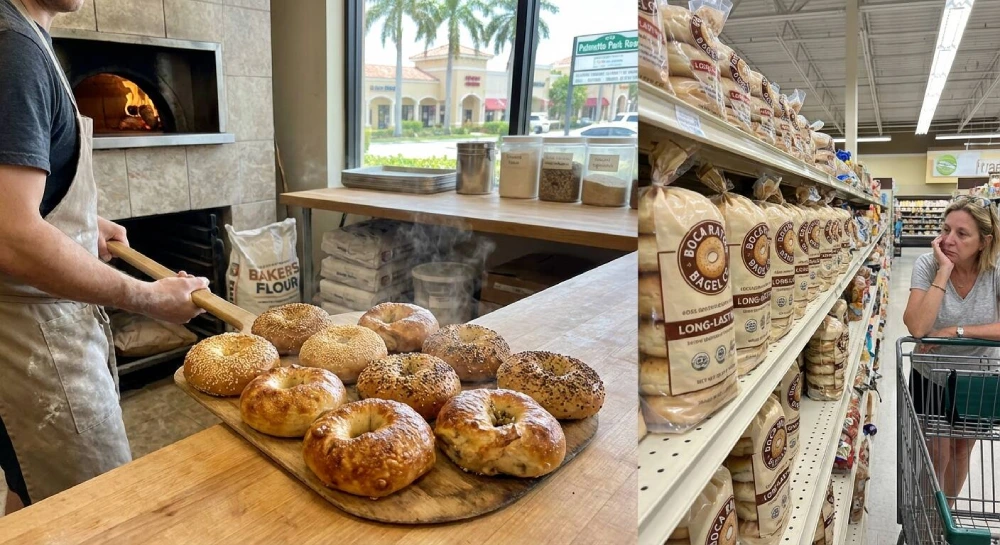
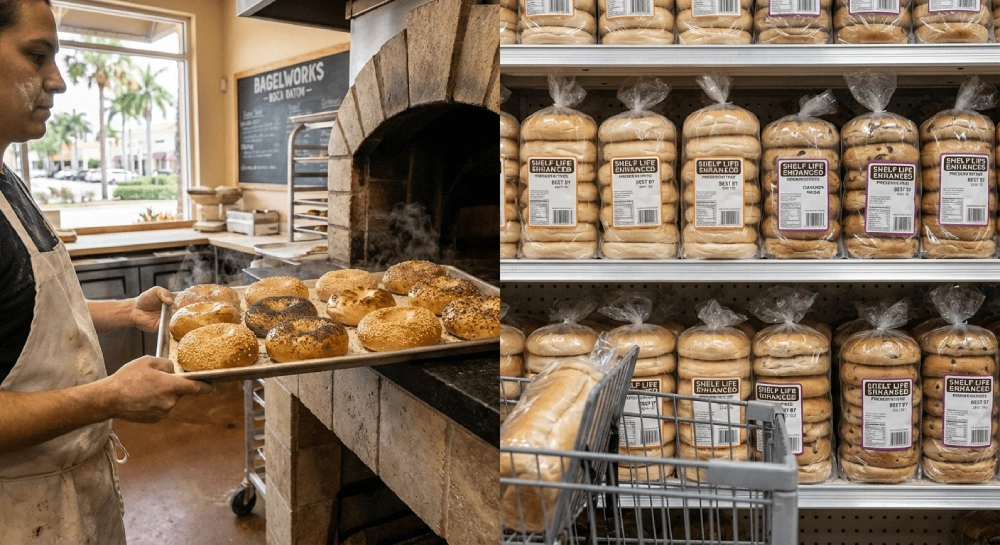
Most people think bagels are just bagels. Dough, hole in the middle, done. But there's a gap between what comes out of a bakery oven and what sits in plastic on a grocery shelf — and if you've never noticed it, you're missing the whole point. Fresh bagels aren't just newer. They're built different. The ingredients, the process, the texture — none of it translates when you're chasing shelf life over substance.
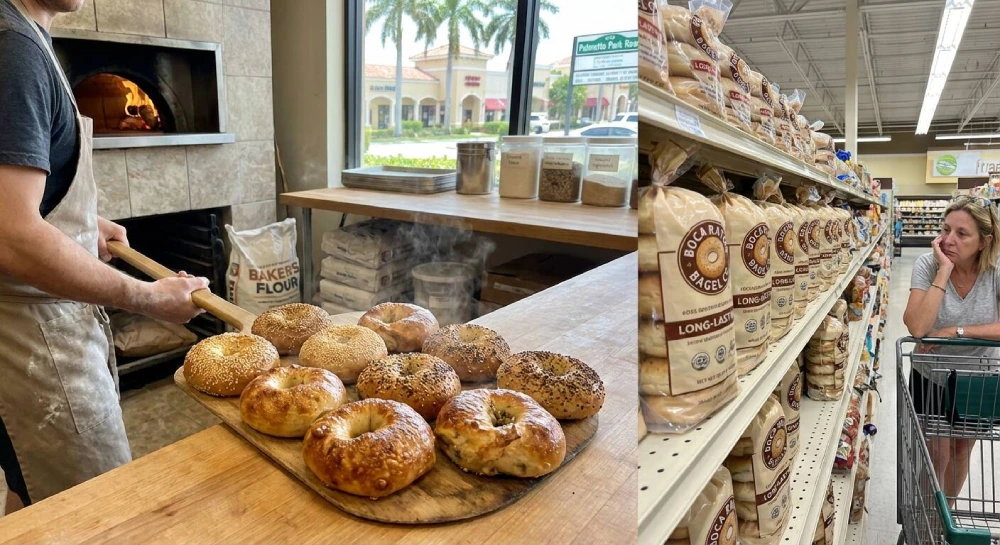
So here's what matters. If you're biting into something that tastes like bread with a hole, that's not a bagel. That's a compromise. Real bagels have weight. They have chew. And they don't need a paragraph of unpronounceable additives to make it through the week.
What Goes In Tells You What Comes Out
Bakeries that know what they're doing keep the ingredient list short. High-gluten flour, water, yeast, salt, maybe a touch of malt. That's it. No dough conditioners, no preservatives, no sugar bombs to fake softness. The goal isn't to make something that lasts forever — it's to make something worth eating right now.
>Store bought bagels flip that script. Shelf stability becomes the priority, and that means additives. Lots of them. The result is a product that might look like a bagel but tastes like a science experiment. If your bagel has more ingredients than your grandmother would recognize, you're not eating tradition — you're eating convenience.
The Boil Makes the Bagel
Here's where most mass producers cut corners. A real bagel gets boiled before it hits the oven. That step isn't optional — it's what creates the perfect bagel texture that define the whole experience. Boiling gelatinizes the surface starches and locks in moisture, giving you that signature bite.
Skip the boil, and you're left with bread shaped like a bagel. Some factories use steam or skip the step entirely to speed things up. The texture suffers. The integrity disappears. And what you're left with is soft, fluffy, and forgettable. If it doesn't have that slight resistance when you bite down, it's not doing its job.
Texture Separates Pretenders from Contenders
A proper bagel has heft. The outside should have a subtle crispness, and the inside should be dense and chewy — not airy, not spongy. That's the payoff for using the right flour and following the process. Store bought versions tend to collapse under their own weight, literally and figuratively. They're lighter, softer, and more bread-like because they're engineered for mass appeal, not authenticity.
We've all had that moment where you tear into a bagel and it just falls apart. That's not how it's supposed to go. A fresh bagel holds its shape. It gives you something to work against. And when you toast it, the contrast between the crisp exterior and chewy interior becomes even more pronounced. That's the standard.
Flavor Doesn't Lie
Fresh bagels taste like something. There's a subtle maltiness, a hint of fermentation, a richness that comes from quality ingredients and time. Store bought bagels often taste like nothing — or worse, like sugar and preservatives trying to mask the fact that there's no real flavor underneath.
When you buy a bagel that was baked that morning, you're tasting the result of care. The dough was mixed, shaped, boiled, and baked with intention. When you buy one that's been sitting in a bag for a week, you're tasting logistics. And logistics don't taste good.
Shelf Life Is a Trade Off
Store bought bagels last longer because they're designed to. Preservatives, packaging, and processing all work together to keep them soft and mold-free for days or even weeks. That's convenient, sure. But that's also why they taste the way they do.
Fresh bagels go stale faster. Usually within a day or two. But that's not a flaw — it's proof that nothing artificial is holding them together. If you're not going to eat them right away, freeze them. They'll keep just fine, and when you toast them, they'll still taste like the real thing. No preservatives required. Learn more about keeping your bagels fresh with proper storage techniques.
Variety Comes from Craft, Not a Factory Line
Walk into a bakery and you'll see options. Sesame, poppy, everything, asiago, jalapeño cheddar, blueberry — the list goes on. And most of those flavors are made fresh, with real ingredients, not artificial flavorings or freeze-dried bits. Check out bagel varieties from around the world to see how different cultures approach this beloved bread.
Store shelves offer variety too, but it's limited. And the flavors often taste muted or artificial because they're designed to survive shipping and storage. A fresh everything bagel has garlic, onion, sesame, poppy, and salt that you can see and taste. A store bought version has a dusting of something that vaguely resembles the idea of those ingredients.
The Real Cost of Cutting Corners
Buying fresh costs a little more. Takes a little more effort. But the difference isn't subtle. It's the difference between eating something made with intention and eating something made to fill a shelf. One respects the craft. The other respects the supply chain.
If you've never had a bagel straight from a bakery oven, you're operating with incomplete information. And if you have, you already know there's no going back. The chew, the crust, the flavor — it's all there, and it's all worth it. Discover what goes into making perfect bagel dough at our Boca Raton bakery, or see how we make bagels from scratch every day. Store bought bagels have their place, but they're not the same game. Not even close. Visit Bagelworks to experience the difference for yourself.
Experience the Fresh Difference with Us
We believe every bite should remind you why fresh matters. If you’re ready to taste bagels the way they’re meant to be—chewy, flavorful, and made with care—let’s make it happen together. Give us a call at 561-852-8992 or contact us today and let’s bring real bagels back to your table.
‹ Back
Comments